

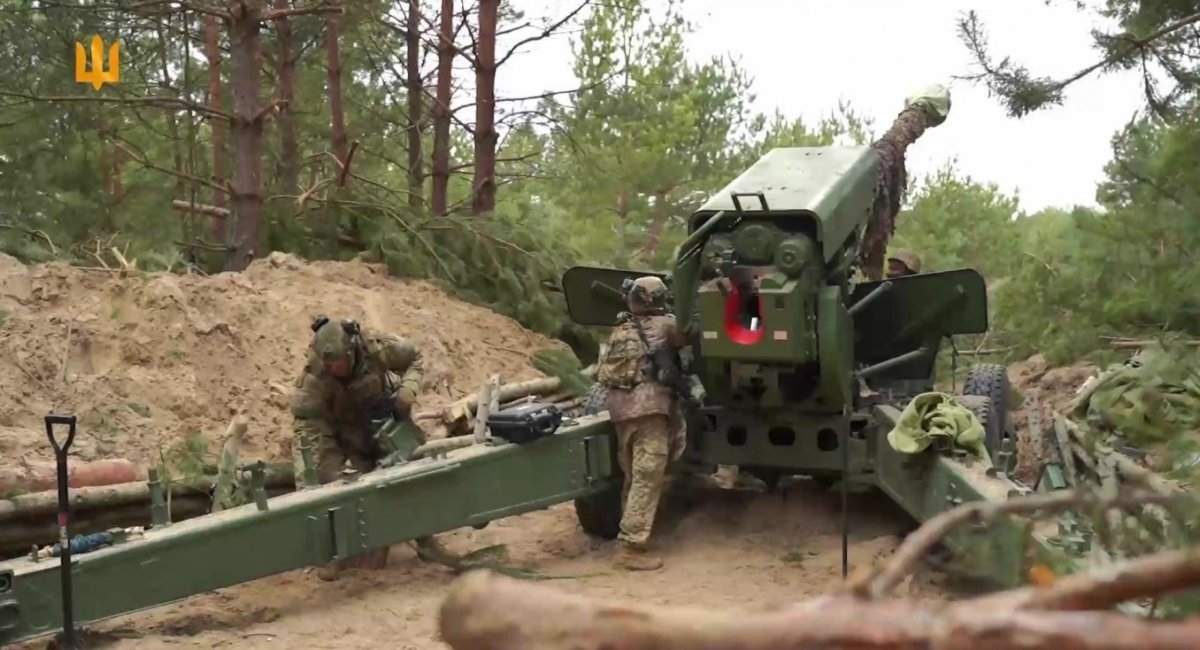
What allowed Ukrainians to shift their focus to midrange strikes from frantically stopping the momentum of the russian offensive was the backstop that artillery provided to Ukraine after ammunition and howitzer supplies were sufficiently supplied.
Yes, most combatants are on paper eliminated by drones, but the drones are always working with artillery in such a way that the drones are often the first try, the second try and third try but if those don’t work the fourth, fifth, sixth, seventh, eighth, ninth, tenth, eleventh etc… tries will be artillery. Artillery does not stop firing and it can concentrate unfathomable amounts of force into a tiny amount of area.
Ukrainian defenders may have enough drones to stop a normal russian attack for that part of a frontline, but if a surprise unified armored push happens the local supply can be easily depleted, the same is not true for artillery. Artillery can quickly orient to providing a constant waterfall of force over large distances and an immense amount of ammunition can be stockpiled, so much that you can’t really comprehend the impact it represents.
When artillery operators talk about firing 100 rounds a day through a 155mm or 105mm howitzer during an intense battle, you have to think about the immensity of that physical impact integrated together. It dwarfs everything else on the battlefield including drones.
Artillery is an anvil and make no mistake, the anvil has shattered russia’s frontline.
https://inv.nadeko.net/watch?v=-M2-Yr7iaKI
https://www.youtube.com/watch?v=-M2-Yr7iaKI
Imagine a crew of ~8 delivering 100 of these in a day and you start to get the picture of what 155mm artillery really is.
100 rounds a day? In WWI they were often doing 300 per day for routine work. And for offenses 2000 times per day was not unheard of.