As counter argument: How often would you say has humanity managed to create a political system that does not promote incompetent people pleaser over the span of, let’s say 100 years.
It’s all about the intensity of promotion of incompetent people pleasers that’s prioritized. When a system, like that of the Soviets, is built on misreporting numbers on a massive scale from top to bottom, even internal Soviet institutions could struggle to figure out even a rough approximation of what the truth was rather than what everyone down the line thought their superiors wanted to hear. A poor ability to actually record, verify, and process information was also involved.
It’s a very specific and toxic mix of institutional cultures and disincentives (how would you like to go back to the slums doing hard labor, comrade, with access to the special stores with basic consumer goods revoked? There is no job search available for you if you piss off your superior; you can consider yourself blacklisted and, like all good Soviet citizens, restricted to the Soviet Union for any future prospects), very much related to the ‘dictator’s dilemma’, which is notable (and named) precisely because it does not generally have lasting currency in less-authoritarian systems. Even a fairly low rate of political turnover overall is deeply damaging to the ability of such vranyo to perpetuate itself as a norm.
No system is perfect. But some systems are worse than others. No system provides justice, but some systems are certainly more unjust than others. No system prevents incompetence entirely - but only some systems enable it on such a scale and intensity that even deeply technical fields are rotted down to their very ability to regulate their own functioning, even at the knowing risk to the operators’ own lives.


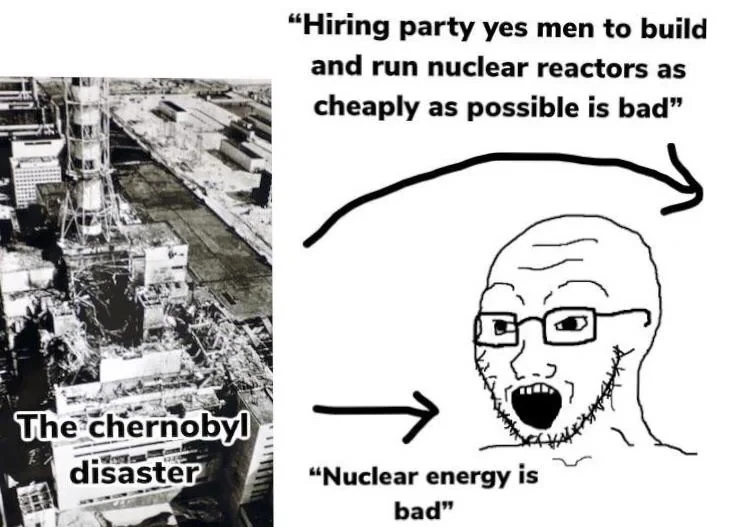
It’s all about the intensity of promotion of incompetent people pleasers that’s prioritized. When a system, like that of the Soviets, is built on misreporting numbers on a massive scale from top to bottom, even internal Soviet institutions could struggle to figure out even a rough approximation of what the truth was rather than what everyone down the line thought their superiors wanted to hear. A poor ability to actually record, verify, and process information was also involved.
It’s a very specific and toxic mix of institutional cultures and disincentives (how would you like to go back to the slums doing hard labor, comrade, with access to the special stores with basic consumer goods revoked? There is no job search available for you if you piss off your superior; you can consider yourself blacklisted and, like all good Soviet citizens, restricted to the Soviet Union for any future prospects), very much related to the ‘dictator’s dilemma’, which is notable (and named) precisely because it does not generally have lasting currency in less-authoritarian systems. Even a fairly low rate of political turnover overall is deeply damaging to the ability of such vranyo to perpetuate itself as a norm.
No system is perfect. But some systems are worse than others. No system provides justice, but some systems are certainly more unjust than others. No system prevents incompetence entirely - but only some systems enable it on such a scale and intensity that even deeply technical fields are rotted down to their very ability to regulate their own functioning, even at the knowing risk to the operators’ own lives.