

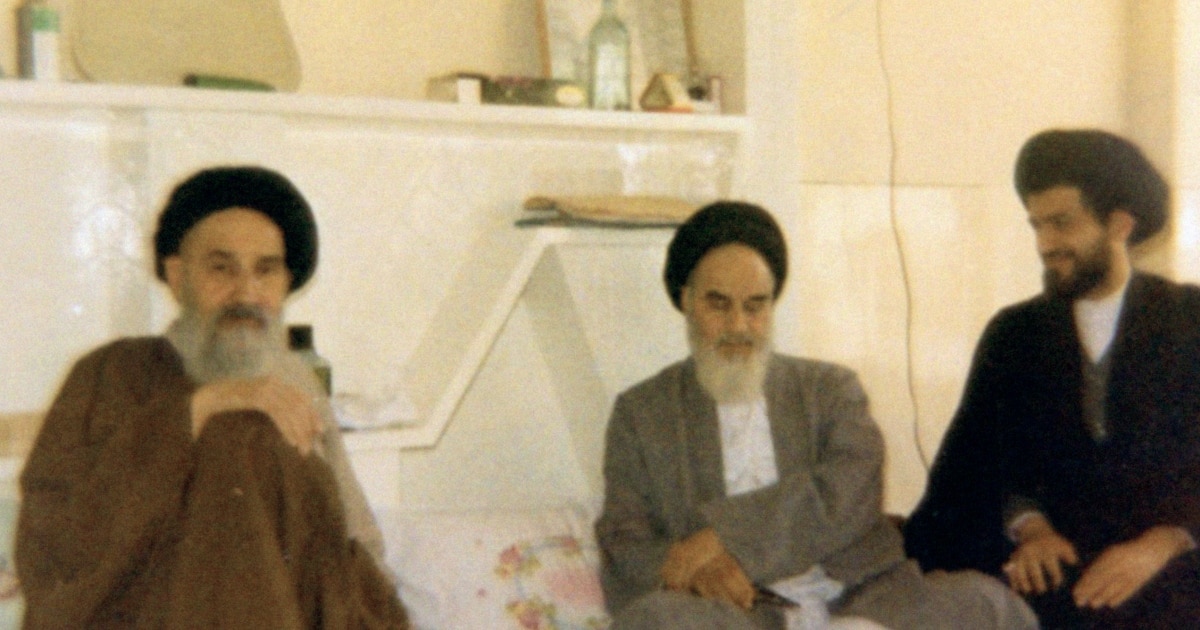
But Khomeini and his close aides secretly engaged with Washington before and after he came to power following the Islamic Revolution in 1979, according to U.S. documents that have been declassified in recent years.
A declassified U.S. Embassy cable recently obtained by RFE/RL’s Radio Farda provides further evidence of the covert contacts between Iranian clerics and U.S. representatives.
Dated February 26, 1964, the confidential document reveals that Khomeini’s longtime friend and associate, Ayatollah Seyed Mohammad Sadegh Lavasani, met with two U.S. Embassy officials at his residence in Tehran.
The embassy cable said Lavasani’s “position as Tehran representative of Ayatollah Khomeini contributes to his importance and influence in the Iranian clerical community, particularly in its political role.”
Lavasani was a comptroller, according to the U.S. document, suggesting that he oversaw the expenditure of funds and donations that Khomeini received “from all over the Shi’a world.”
The document said Lavasani was one of only 18 people who had access to Khomeini, who by 1964 had become a key critic of the U.S.-backed shah of Iran, Mohammad Reza Pahlavi, whom he accused of being a Western “puppet.”
Lavasani is among several of Khomeini’s aides who had secret contacts with U.S. officials before 1979.
Declassified CIA documents have revealed contacts between Khomeini and the administration of then-U.S. President Jimmy Carter just weeks before the revolution. The documents suggest that Khomeini was open to dialogue with Washington and would not undermine U.S. interests if he came to power.
U.S. documents declassified in recent years have also revealed that U.S. representatives met with key Iranian officials after the revolution, including Ayatollah Mohammad Beheshti, who was considered Khomeini’s second in command; former Foreign Minister Ebrahim Yazdi; and Mehdi Bazargan, the first prime minister after the revolution.