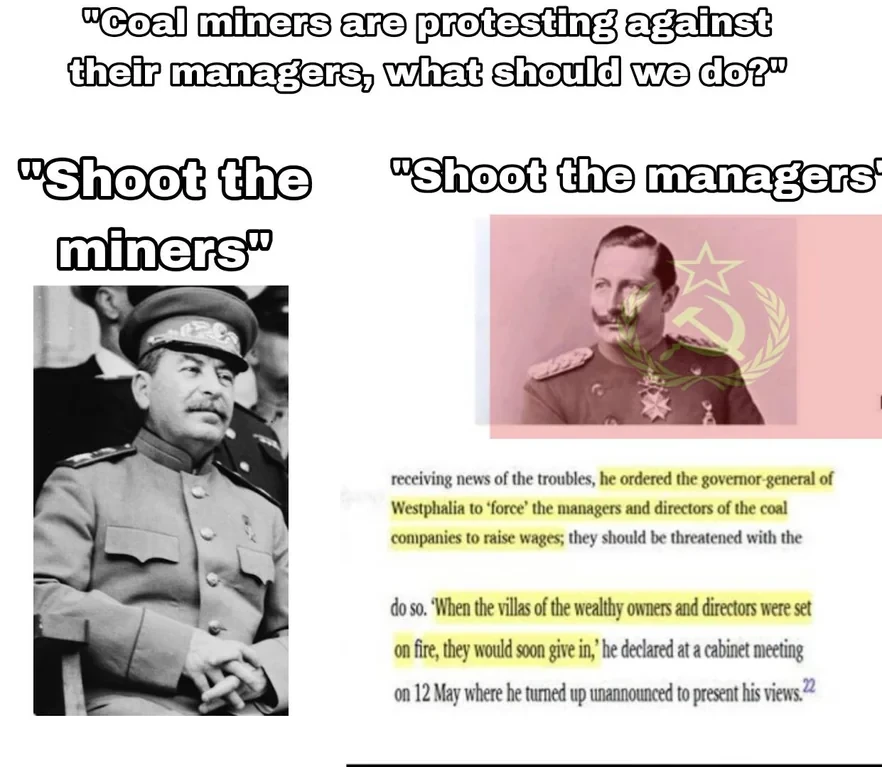
Explanation: The Soviet dictator Joseph Stalin suppressed a great number of workers’ strikes during his tenure at the head of the Soviet Union - very few of them peacefully or through negotiation. The PEOPLE’S repression of the proletariat!
The Imperial German Kaiser, Wilhelm II, a generation before, was a… mercurial man. He also sanctioned putting down workers’ strikes with violence, make no mistake, and was in general an ally of capital more than labor.
… but on occasion, his sense of noblesse oblige would lead him to side against the bourgeois, leading to some bizarre alignments by the eyes of those of us who are more used to the two sides being “Bourgeois and proletariat”, with “aristocracy” being a term of abuse, or a withered wing of the former, rather than a distinct class with its own interests.
As aristocracies are dependent on personal loyalties in a structurally clientistic sense, rather than direct ownership of capital, sometimes retaining the faith of the people in “The Good Monarch” or “The Good Count” is more important than reminding them they have no say in your actions.
A monarch and nobility don’t need to win elections or campaign funds. They need to be somewhat popular though and actually enjoy being liked by the people.

Explanation: The Soviet dictator Joseph Stalin suppressed a great number of workers’ strikes during his tenure at the head of the Soviet Union - very few of them peacefully or through negotiation. The PEOPLE’S repression of the proletariat!
The Imperial German Kaiser, Wilhelm II, a generation before, was a… mercurial man. He also sanctioned putting down workers’ strikes with violence, make no mistake, and was in general an ally of capital more than labor.
… but on occasion, his sense of noblesse oblige would lead him to side against the bourgeois, leading to some bizarre alignments by the eyes of those of us who are more used to the two sides being “Bourgeois and proletariat”, with “aristocracy” being a term of abuse, or a withered wing of the former, rather than a distinct class with its own interests.
As aristocracies are dependent on personal loyalties in a structurally clientistic sense, rather than direct ownership of capital, sometimes retaining the faith of the people in “The Good Monarch” or “The Good Count” is more important than reminding them they have no say in your actions.
A monarch and nobility don’t need to win elections or campaign funds. They need to be somewhat popular though and actually enjoy being liked by the people.