Could you be more specific? I’m beefing with a couple of different eldritch horrors atm so I got a lot of curses stacked.

queerlilhayseed
- 5 Posts
- 69 Comments
Joined 8 months ago
Cake day: September 27th, 2025
You are not logged in. If you use a Fediverse account that is able to follow users, you can follow this user.
 471·4 days ago
I am no expert but this feels like a fun and useful bookmark:
Something I learned / remembered from reading that:
Though tear gas was classified as a chemical weapon in 1993
and banned from use in international warfare, law enforcement
officers are still allowed to use it on civilians in the United States.
That’s fun.
 1·4 days ago
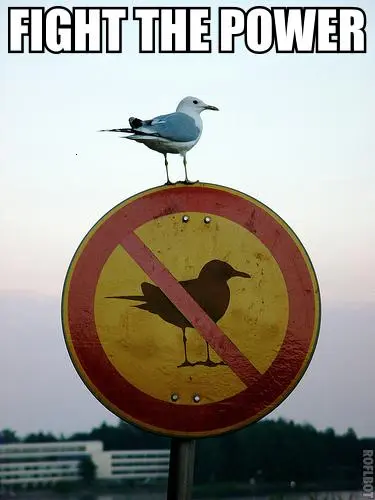
I am generally anti bulk imports from Reddit, but if there were a /r/stupiddovenests mirror I would make an exception.
wow, TIL. Poor guy.
That whole wikipedia page reads like a tall tale.
It’s a remarkable material. one of my favorites. Gonna go watch videos about it on youtube right now, now that I think of it. it’s been a while, there might be some new ones.
I feel like it would make a good 3d printer material for certain applications, and there are formulations that are highly recyclable. I would love to be able to print prototypes without wasting tons of plastic. But I need to learn a lot more about materials science and a little more about robotics before I can really reason about how a working cyanoacrylate printer would behave. It would be a fun project to try if I had tons of money.
Depends on the species of the mumma / baby used to size the hamsters.
Amoeba: I’m taking the 5 babies. It’ll be harder but I still like my chances.
Oak Tree: I think my only chance is to take the babies, Though I’d be tempted to choose momma just to marvel at such a creature.
Elephant: No good options here, in a fair fight I’d lose either match. I think my only shot is to choose the momma hamster and try to win through trickery.
Hummingbird: I would lose via forfeit. They’re too cute I can’t do it.
When I was a kid I discovered that cyanoacrylate acts upon human skin. It also acts upon all the change in my parents’ giant change jar.
I was not prepared for
spoiler
FOOF
 33·4 days ago
Well well well if it isn’t the ghost of baby me.
- you did
- like a cucumber popsicle
- you were
- I did
- you did not bb you are beautiful and perfect.
I would love to find out but the man keeps denying my grant applications.
That is way more impressive. Any idiot can eat a baby.
I used to be an upright Satanist, then I listened to a Weezer CD with the channels swapped and it… tempted me to experiment. With TTRPGs.

 31·4 days ago
Taking memes seriously and arguing about them on the internet is inherently problematic.
Allow me to elaborate.
I love taking memes seriously and arguing about them on the internet. Of all the myriad topics available for argument, art is my favorite, especially trivial art. The lower the stakes of the topic at hand, the easier it is to wax into the soaring heights of rhetoric for rhetoric’s sake, and memes are the lowest-possible stakes art in the modern era. Untethered from the stakes of real life, meme arguments become less like a real fight and more a sparring match.
Like a martial art divorced from its original purpose of life-and-death struggle and fitted into a ceremonial safety harness, argument in the cocoon of low-stakes banter becomes increasingly stylized. Performances are evaluated not by the merits of the old way, but by the customs and traditions of the new way. Correctness in the primary qualia of the form gradually gives way, and is in time completely subsumed by, correctness in the self-referential and ever-increasing secondary qualia of the form’s now-sanitized version, and soon even those secondary qualia are indistinguishable in the flood of tertiary and n-ary qualia. In-group references proliferate and metastasize into subgenres and become the bases by which future arguments are judged in their turn. Conversation becomes an impenetrable wall of tangled device and argument, each new argument a new body accreted into the mass of metadiscourse that slowly, but inexorably, drives meaningful information exchange asymptotically to zero.
Into this chaos steps the neophyte, the next generation, the young human learning something about the world for the first time. They don’t know the devices, the references, the tools and style of this esoteric mode of argument. And why should they? Look into the deepest recesses of the deepest niches of the internet and tell me truly that you understand them at a glance. I think no mortal can. Where, then, can the neophyte find purchase, a single foothold in the cliff face of hubris before them? Must they slowly, arduously, with great pain and error, unravel each literal Gordian knot themselves? Must every human peel every onion, one layer at a time, with tears and suffering?
We must not heed the siren song of trivial argument. Each joke, each metameme, each niche reference is a caltrop in the path of future generations. And when an argument is impossible to understand, it is impossible to learn its significance. In other words, they start to take you seriously because they don’t understand you, and taking nonsense seriously makes you dumber. Arguing about memes on the internet makes us dumber.
Is this really the world we want?
Or, because I can’t decide which thunderous closer I like better,
Won’t somebody think of the children?
I don’t wear a black hoodie to indicate that I know computer stuff, but it is remarkable how much more receptive non-techies are when I wear one. It’s like a lab coat for computer doctors.
people aren’t going to believe the TVA lied to them - they’re going to believe some evil left wing conspiracy is poisoning them.
They don’t believe the truth because they are the targets of a sophisticated, orchestrated information attack, designed to saturate the information environment with enough disinformation and misinformation that diverts attention away from the truth and toward an endless cycle of meaningless culture war bullshit. My parents were immersed in it their whole lives, and it hurt them their whole lives, and they went to their early graves not understanding why the system wouldn’t reward them for their loyalty. They just thought they hadn’t worked hard enough or been smart enough, or just weren’t lucky enough. Or that the Muslims, or the queers, or the blacks, or the socialists had by some poorly-defined contrivance, damaged society enough that the honest hard-working folks like themselves couldn’t live without constant acute anxiety about food and housing safety. They were so confused, and sad, and angry their whole lives. I wish I could have saved them from that. Still trying to save the living.

It’s Roko’s Basilisk but their hell is doing exactly what they’re doing right now, forever. I like it. Really makes u think.
 15·8 days ago
Inertia is a hell of a fundamental property of the universe.
I am moving to codeberg / forgejo… slowly… I’m gonna migrate everything one day I swear.
 17·9 days ago
I call this the “Alice in chains” class of cryptographic problems, where one or both communicators are under severe social and political repression, to the point that even sending messages can be dangerous or impossible even if the contents themselves are secure.
They’re difficult to address because the particulars vary so broadly from case to case, and the challenges are more political and infrastructural than strictly technological or mathematical. I think one of the best things we can do to address these problems is building a resilient, low-cost, general purpose data network that can’t be easily cut off at government or corporate chokepoints. Mesh networks are a big part of the puzzle.



If I thought about it as much as my brain wants to I would drive myself mad. The system has too much inertia and the fixes we are forced to implement now (and for the next little while) are damage mitigation, not fixes. It’s just not going to be fixed for a while. If I tried to address it with the same tenacity that I approach my day-to-day problems my mind would overheat and I’d die. So I just have to spend most of my time brushing my teeth and keeping my car from breaking down and trying to find a fucking job so I can continue to buy food at my accustomed rate. I squeeze in a little damage mitigation where I can but I can’t afford to dwell on the elephant that we have to eat. Too much problem for tonight.