It’s not an American thing. It’s a posh southern England thing that got exported to the states by American students at Oxford returning stateside and bringing the game back with them.
It’s not just to distinguish it from rugby football. There are dozens of different types of games of football. Association football is just the one that got particularly popular across the world.
I watched several documentaries over the years that said it is because at the time Football Clubs were referred to as Social Clubs and the team was just part of the Social Club. The clubs were referred to as “Socs” pronounced like the footwear Socks, and the Teams would play what was referred to a s “Soccer” as in Sock-er. Then this got exported to various people in North America, mostly from the South and West of England. Then it fell out of usage in England but no one told us over here in North America so we kept using the term.
To maybe be more clear: you are implying that the c in “soc” is pronounced like a “sh” when it’s the t in “tion”.
Is it not? How do you pronounce it?
Also I’m pretty sure that’s what the “ʃən” at the end of the pronunciation thing means.
Looking at the sound-by-sound pronunciation, it seems to confirm this.
/ʃ/ as in she
/ən/ as in sudden
I think the question was whether or not people pronounce the “soc” in “soccer” the same as they pronounce it in “association” (“soʃ” I guess), or like “sock”
I did provide a link where both the British and the American pronunciation treat the c as an s sound. They have the IPA as
/əˌsəʊ.siˈeɪ.ʃən/
for both dialects. “soc” does contain the c, not the t.
As I said, I’m not debating that the t in “tion” is pronounced that way (at least I tried to be clear, maybe I muddled it even more), but I have always pronounced the c as an s sound, and it appears Cambridge agrees with me.
Some British English dialects do use a ʃ sound for the C in “association”. OED has it listed for both UK and USA, though I don’t personally know what the US situation is there
The pronunciation tab there is paywalled, but in the OED app on my phone, they list /əˌsəʊsiˈeɪʃn/, followed by /əˌsəʊʃiˈeɪʃn/ in the pronunciation section. I honestly can’t recall ever hearing a single person in the US pronounce it /əˌsəʊʃiˈeɪʃn/, and though I won’t say nobody does, the other pronunciation is far and away more common, where the ‘c’ and ‘t’ make entirely distinct sounds.


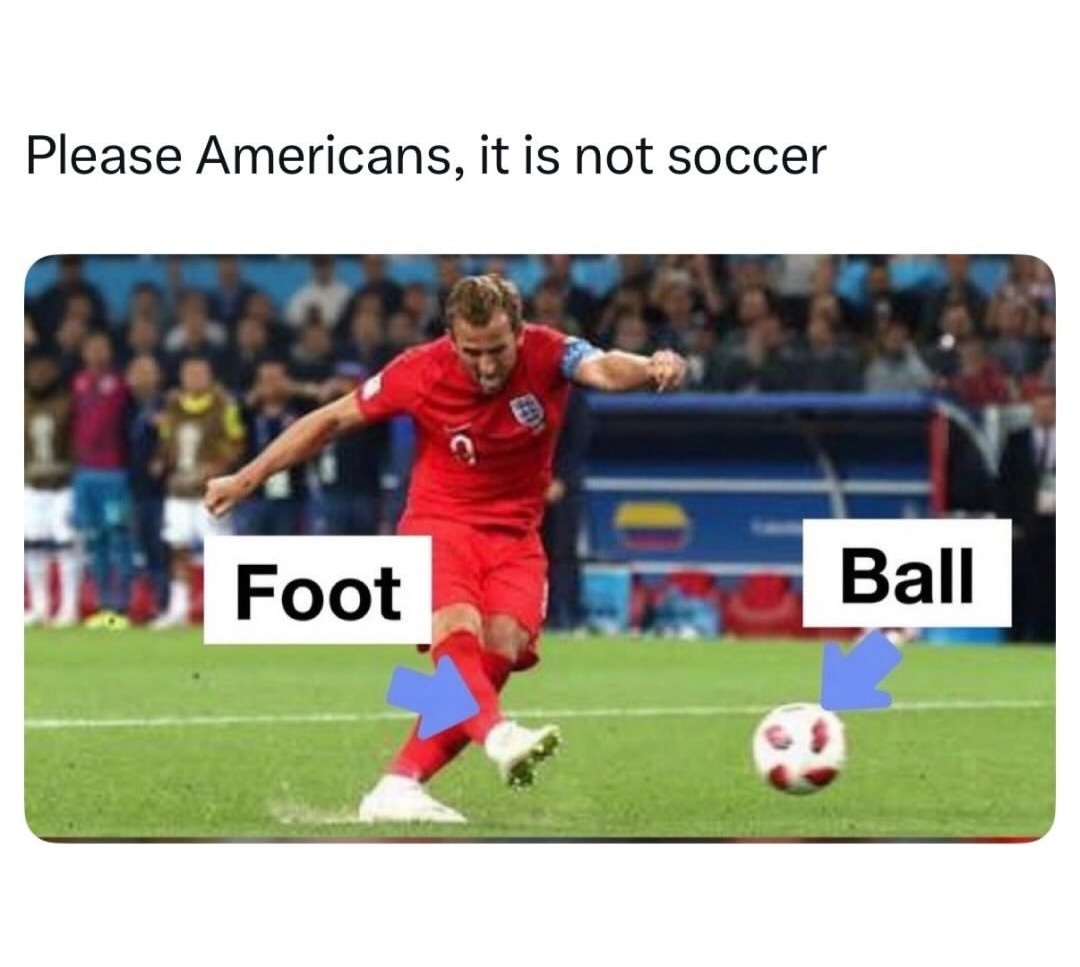
Soccer is a British word though, but predominantly southerner / Oxfordian.
Association Football used to get contracted to Assoc or Soc to differentiate it from Rugby Football.
And in Oxford, they historically liked to add -er to the end of things; still in parlance today is calling Rugby “rugger”, £5 note “fiver”, the Bodleian Library “Bodder”.
Assoc became “soccer”.
It’s not an American thing. It’s a posh southern England thing that got exported to the states by American students at Oxford returning stateside and bringing the game back with them.
It’s not just to distinguish it from rugby football. There are dozens of different types of games of football. Association football is just the one that got particularly popular across the world.
So it should be pronounced like so-ser?
In Scotland, yes.
I watched several documentaries over the years that said it is because at the time Football Clubs were referred to as Social Clubs and the team was just part of the Social Club. The clubs were referred to as “Socs” pronounced like the footwear Socks, and the Teams would play what was referred to a s “Soccer” as in Sock-er. Then this got exported to various people in North America, mostly from the South and West of England. Then it fell out of usage in England but no one told us over here in North America so we kept using the term.
So is it “sock-urh” or “soe’sh-ur”? The latter being like “social” but with an -er ending. Because that’s how ‘association’ is pronounced.
Where is “association” pronounced like that, if I may ask? I could only find the pronunciation I’m familiar with, which is this: https://dictionary.cambridge.org/pronunciation/english/association
To maybe be more clear: you are implying that the c in “soc” is pronounced like a “sh” when it’s the t in “tion”.
(Edit: missed some letters.)
Is it not? How do you pronounce it?
Also I’m pretty sure that’s what the “ʃən” at the end of the pronunciation thing means.
Looking at the sound-by-sound pronunciation, it seems to confirm this.
I think the question was whether or not people pronounce the “soc” in “soccer” the same as they pronounce it in “association” (“soʃ” I guess), or like “sock”
I did provide a link where both the British and the American pronunciation treat the c as an s sound. They have the IPA as /əˌsəʊ.siˈeɪ.ʃən/ for both dialects. “soc” does contain the c, not the t.
As I said, I’m not debating that the t in “tion” is pronounced that way (at least I tried to be clear, maybe I muddled it even more), but I have always pronounced the c as an s sound, and it appears Cambridge agrees with me.
Some British English dialects do use a ʃ sound for the C in “association”. OED has it listed for both UK and USA, though I don’t personally know what the US situation is there
The pronunciation tab there is paywalled, but in the OED app on my phone, they list /əˌsəʊsiˈeɪʃn/, followed by /əˌsəʊʃiˈeɪʃn/ in the pronunciation section. I honestly can’t recall ever hearing a single person in the US pronounce it /əˌsəʊʃiˈeɪʃn/, and though I won’t say nobody does, the other pronunciation is far and away more common, where the ‘c’ and ‘t’ make entirely distinct sounds.
Yeah, that’s how I pronounce ‘association’ as well.
I see now that I said it wrong. The ‘c’ in ‘association’ is pronounced like an ‘s’, so is it ‘so-ser’? Like saying “so-so” but with an -er at the end?
So, if I may ask, how do you pronounce soccer?
I pronounce it the same as other people here: “sock-urh”. I was just confused about the “association” thing, so thanks for clearing that up!
Counterintuitively it’s “sock-urh”.
Cool origin. Still an US thing if only people from the US do it.
“The origin is British so it’s your fault we do it” sounds like “mom didn’t educate me so it’s her fault I’m a deadbeat - 40y.o. adult”.
You are allowed to improve your language.
Would it be an improvement? Languages are fluid, etymology is complicated, and things are called what they’re called.
Yet there is not a single British person who calls it soccer.
This isn’t a strong argument; Brits mangle the language every time they open their mouths.
It’s not just Brits, literally the whole world calls it football except for one country which thinks it is right and everyone else is wrong.
So, what you’re saying is the majority of first-language English speakers call it soccer?
Also, show some fucking respect to Canada.
If that makes you feel better then sure, let’s forget the billions of other people in the world who also call it football.