It is actually fairly irritating to me when people do this. It’s not a proper noun. It’s honestly wild to completely change your accent for the pronunciation of a single word in your sentence.
If you had a trans-atlantic accent, you wouldn’t suddenly roll your rs when pronouncing “burrito”, or do an impression of the Japanese when saying “sashimi”. If you did, it would probably sound disrespectful af.
So why does everyone do it with “croissant” and act like it’s totally normal?
IDK what “trans-atlantic” means for you, nor what you mean by putting on an accent or impression, but I’m German and I made it a habit to try to pronounce foreign words closer to their native language. I do roll rs in burrito, for instance. It’s not a big change. Croissant is a given since everyone here pronounces it fairly French anyway. I don’t know how Sashimi is pronounced, but if I had regular encounters with the word, I’d probably learn.
“Trans-atlantic” is a forced/learned accent that used to be more popular ~100 years ago. It was basically meant to represent people that were born in the US, but educated in the UK (or vice versa). Essentially, it was supposed to signify that you were wealthy enough to have connections on both sides of the Atlantic.
People intentionally learned to speak that way, though, and it became common on radio broadcasts (so you could also hear it referred to as an “old-timey announcer voice” or something similar).
I think people have made the point with specific references like “coup d’etat” and “faux pas”. I think the general answer is that language standards are fluid and common usage tends to become standard over time. The word “croissant” might be in a transition period depending on personal experience. I’ve always heard it in pronounced in the French or at least French-ish way, so to me “croy-sant” sounds kind of hillbilly. I grew up with Pillsbury Crescent Rolls.
Exactly! Rapidly changing accent for single words leads to poor understanding, which is the whole point of speech.
A loanword is not a word randomly spoken in another language, it’s a word taken from one language into another, which often involves a change in pronunciation.
If you dont acknowledge that, you’d have to acknowledge that the entire French language is just poorly pronounced Latin, which is insane.
“Burrito” is a Spanish word for a little donkey, but it’s also an English word for a food item, and they are not typically pronounced the same. Someone fluent in both languages will pronounce them differently depending on which language they are speaking.
Yeah, but I would argue that when I say “pass me a tortilla” I’m saying “tortilla” in English, which has mostly the same pronunciation as the Spanish (though I think the “t” is pronounced differently).
The fact that “coup d’etat” is pronounced mostly the same might just be happenstance.


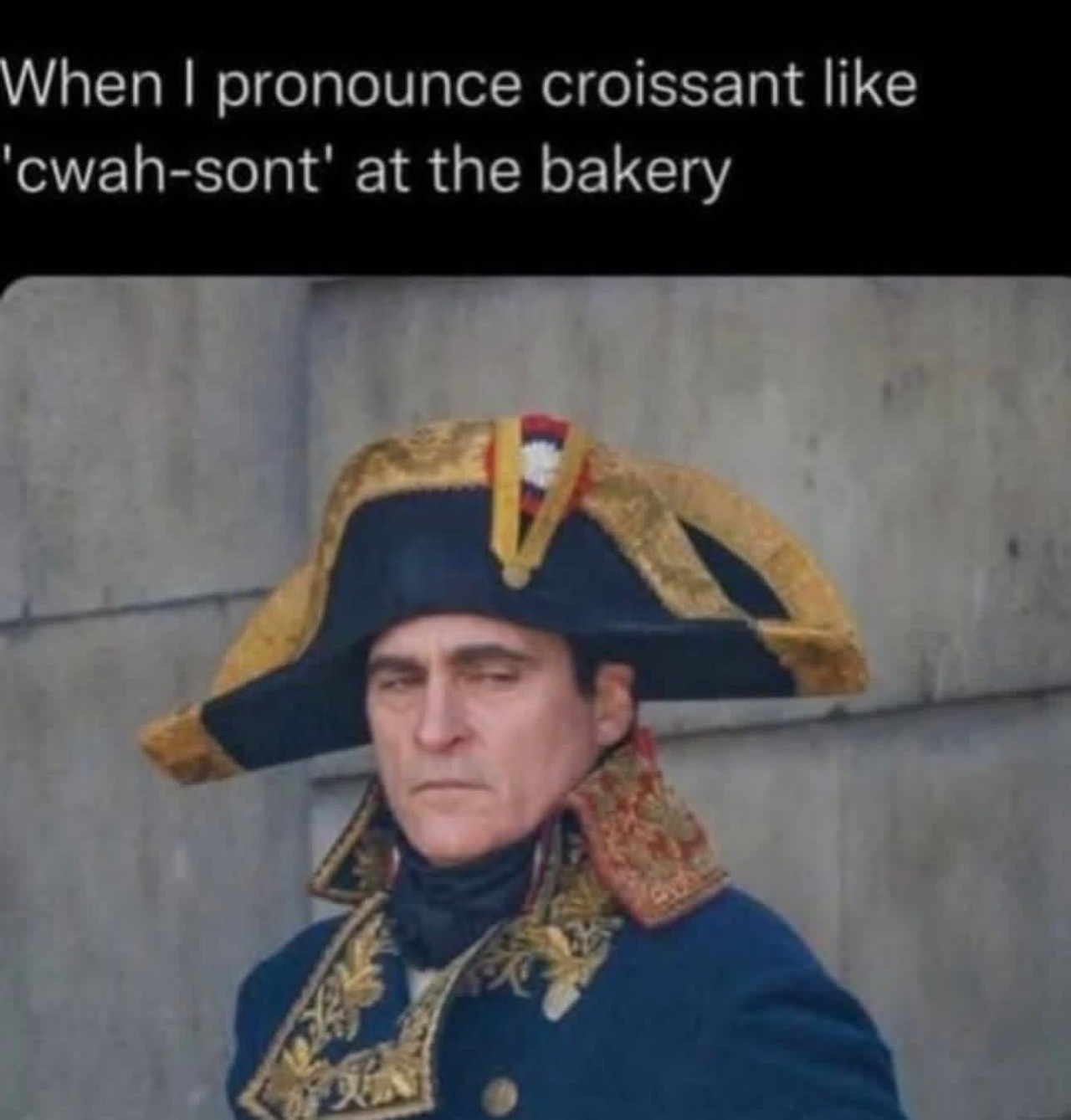
It is actually fairly irritating to me when people do this. It’s not a proper noun. It’s honestly wild to completely change your accent for the pronunciation of a single word in your sentence.
If you had a trans-atlantic accent, you wouldn’t suddenly roll your rs when pronouncing “burrito”, or do an impression of the Japanese when saying “sashimi”. If you did, it would probably sound disrespectful af.
So why does everyone do it with “croissant” and act like it’s totally normal?
How do you pronounce jalapeño?
Duh… jappaleeno!
i am hard man
IDK what “trans-atlantic” means for you, nor what you mean by putting on an accent or impression, but I’m German and I made it a habit to try to pronounce foreign words closer to their native language. I do roll rs in burrito, for instance. It’s not a big change. Croissant is a given since everyone here pronounces it fairly French anyway. I don’t know how Sashimi is pronounced, but if I had regular encounters with the word, I’d probably learn.
“Trans-atlantic” is a forced/learned accent that used to be more popular ~100 years ago. It was basically meant to represent people that were born in the US, but educated in the UK (or vice versa). Essentially, it was supposed to signify that you were wealthy enough to have connections on both sides of the Atlantic.
People intentionally learned to speak that way, though, and it became common on radio broadcasts (so you could also hear it referred to as an “old-timey announcer voice” or something similar).
Ooooh it’s a specific accent, gotcha. Thanks!
I think people have made the point with specific references like “coup d’etat” and “faux pas”. I think the general answer is that language standards are fluid and common usage tends to become standard over time. The word “croissant” might be in a transition period depending on personal experience. I’ve always heard it in pronounced in the French or at least French-ish way, so to me “croy-sant” sounds kind of hillbilly. I grew up with Pillsbury Crescent Rolls.
Probably because english has a bunch of french words we do this for because of our legacy with courtly french. Entree is another example.
Exactly! Rapidly changing accent for single words leads to poor understanding, which is the whole point of speech.
A loanword is not a word randomly spoken in another language, it’s a word taken from one language into another, which often involves a change in pronunciation.
If you dont acknowledge that, you’d have to acknowledge that the entire French language is just poorly pronounced Latin, which is insane.
“Burrito” is a Spanish word for a little donkey, but it’s also an English word for a food item, and they are not typically pronounced the same. Someone fluent in both languages will pronounce them differently depending on which language they are speaking.
I doubt you pronounce tortilla “tour-till-uh” or Coup d’état “coop-dee-tat.” Sometimes we change the pronunciation and sometimes we don’t.
Yeah, but I would argue that when I say “pass me a tortilla” I’m saying “tortilla” in English, which has mostly the same pronunciation as the Spanish (though I think the “t” is pronounced differently).
The fact that “coup d’etat” is pronounced mostly the same might just be happenstance.