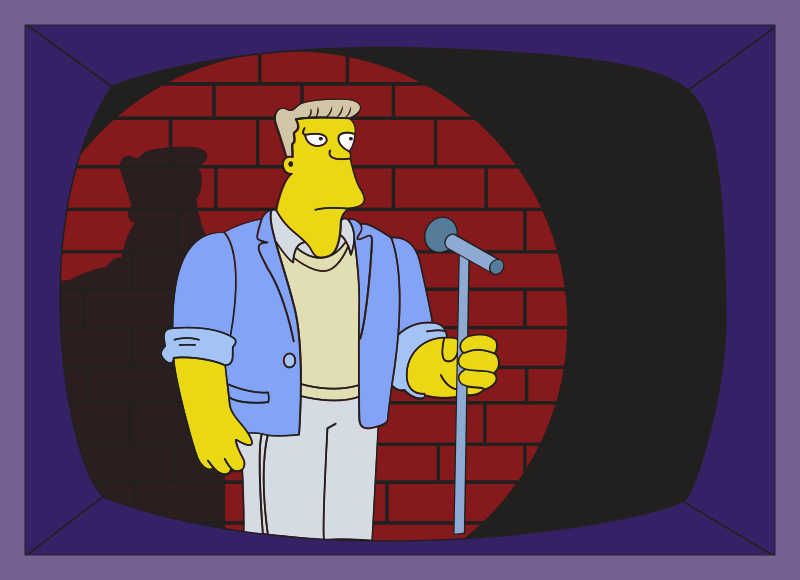
Kojimamoto Toshibayamaha is like the Japanese equivalent of Fordchrysler Smithston

Transit seats shouldn’t have a recline function.
Counter proposal: they recline by keeping the top in place and sliding forward to detract from your own leg room.
Sure that’s fine. I guess more broadly the rule should be that you can’t alter anyone else’s space
… I think I’d rather have someone’s headrest a little closer to me than feeling every movement of the person behind me as they shift in their seat with their knees wedged into mine
My knees are already about an inch from the seat in front of me in economy. How about airlines replace seats with ship style bunks so I can fly in relative comfort.
Looks like that will be a thing soon
I hadn’t thought of that, but ships bunks are almost certainly more space efficient. You could stack them three high pretty easily. Throw in a curtain and I’d take that over a seat I think. Even if you’re not planning on sleeping, it sounds more comfortable.
Airlines charge you for comfort. The transport is the same for everyone on board, but more comfortable accommodations cost more.
If they could get away with loading people in feet-first they would, and your legs would still be too long to be comfortable.
Counter proposal: having to sit 90 degrees bolt upright is agony on my scar tissue after about an hour. Give me five degrees dude. I really need thirty degrees but five (an inch) is barely noticeable for you.
Then they should be reclined by default already. Who wants to sit completely upright for several hours? One reason I have to drive to places is that even if I recline the seat on the bus, I have back pain after an hour.
They take away my tiny little swiss army knife but the samurai gets to keep his katana? Unfair!
This is a train, though
I don’t see how that’s any better. Can you imagine if terrorists hijacked that train and crashed it into a building?
It’s quite hard to steer a train anywhere else than it’s tracks
I mean, if it wasn’t before it is now.
If I looked out the plane’s window and saw those buildings, I’d be weeping too
Katana? Nah, that’s just a handle.
Normal people probably don’t know what a Gaijin even is.
Unless they saw the third installment of the fairly popular movie franchise Fast and Furious.
Then they know Gaijin means “turn around, keep waking”.
Gaijin means family, family means everyone start your engines.
Family means everyone gets left behind, and forgotten. We have a san francisco to knock over.
Nah, the haiku is on point.
Is that all haikus are? 5-7-5? It makes no sense to me, there’s no rhyme, no art IMO.
Yes and no.
The art of haiku is in making the restraint work well. It’s an exceedingly difficult form to even make meh poems in.
Rhyme is not the end-all be-all of poetry to begin with. Look at Whitman as a prime example. A lot of his stuff lacks rhyme, and often to great effect.
Think of poetry as painting pictures with words. You don’t have to use oils to make great art. Rhyme is just one tool to convey the idea. Alliteration, meter, rhythm, tone, you gotta bring the whole toolbox to hope to consistently cause a response in the reader.
Haiku strips things down to the barest essentials. You have only a few strokes of the brush to carry your message, so each stroke must be perfect. It’s akin to calligraphy in that regard. And, that’s an art form with similar constraints in Japan.
A great poet might manage to come up with a handful of truly meaningful haiku in their life. But, part of the art form allows for all levels of greatness. Just conveying meaning at all is a solid success because of the constraints.
I’ve written poetry since I was about 14. Most of it vogon grade tbh. A few that I’m proud of. But I’ve never managed to craft a single haiku that resonated, and I’ve tried.
Someone like Bashō, one of the traditional masters of the art form, manages to be so good at it that it even works when translated (though the art of translating haiku is its own art form).
I dunno if you’re into poetry or not, but I’d suggest taking a look at Bashō and reconsidering the art of the form.
I had to go look it up, but here’s one of my all time favorites from a different poet
"A World of Dew” by Kobayashi Issa
A world of dew,
And within every dewdrop
A world of struggle.
It encapsulates the form, imo. The combination of imagery and meaning that generates thought. Within every dewdrop, a world of struggle.
That’s fucking art.
Japanese can only end in ‘a’, ‘i’, ‘u’, ‘e’, ‘o’, or ‘n’. Rhyming in Japanese is boring because it has so few possible endings that tons of stuff rhymes. Haiku, tanka, and other forms exist with syllable*, rhythm, and even thematic rules instead.
IIRC, Anglo-Saxon poetry before the Norman conquest also wasn’t into rhyming.
* it’s technically not syllables but close enough for this usage.